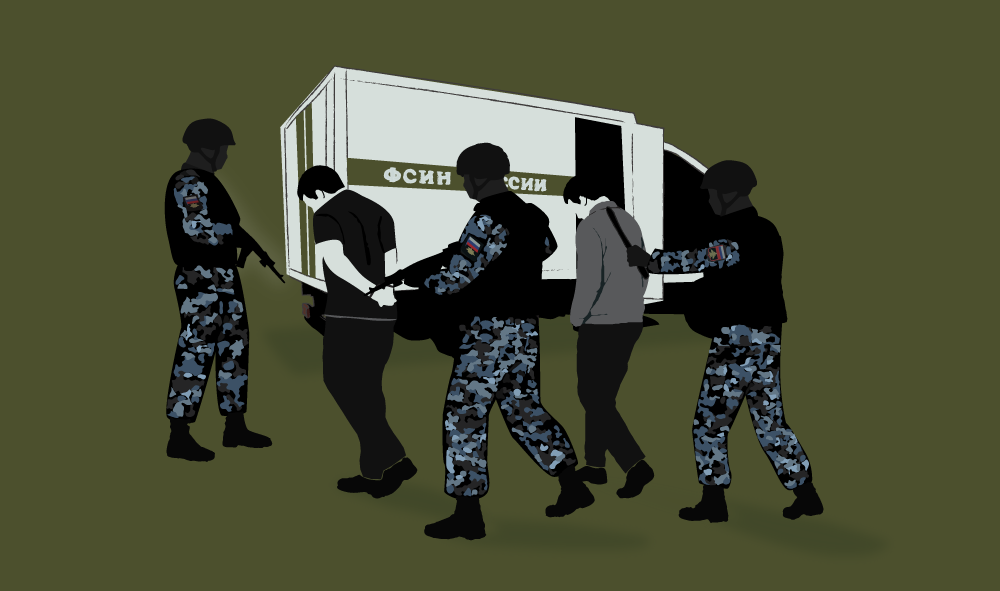
It is a cruel journey that DIGNITY documents in its new report, Deportation to Hell. The report is based on testimonies from 233 former or current civilians serving custodial sentences who were being held in Ukrainian prisons when Russia launched its full-scale invasion on 24 February 2022.
In November 2022, approximately 1,700 prisoners were forcibly deported from prisons in Russian-occupied areas of Ukraine to prisons in Russia.
»The testimonies in the report clearly show that these are not isolated incidents. The report documents a pattern where large numbers of Ukrainian civilians serving custodial sentences were forcibly deported from Russian-occupied territories of Ukraine to the Russian Federation without official explanation, against their will, and under conditions of severe ill-treatment and inhumane conditions. The deportations were not lawful under international humanitarian law. Unlike permissible evacuation, the deportations were not justified by the security of the population or imperative reasons of military necessity. Deportation is being used here as an illegal weapon of war,« says Therese Rytter, Head of Legal Department at DIGNITY, and continues:
»The report’s legal analysis is grave. It concludes that these constitute violations of international humanitarian law and that the deportations are likely to amount to war crimes under the Rome Statute of the International Criminal Court. Furthermore, the nature of the deportations is such that they may also constitute crimes against humanity. This is because they were presumably committed as part of a widespread or systematic attack against the civilian population and with knowledge of the attack.«
Ill-treatment and inhumane conditions
Furthermore, the report documents a pattern of pervasive psychological and physical ill-treatment and torture, as well as inhumane conditions throughout the deportation process.
95 percent of the interviewees reported experiencing or witnessing pervasive psychological and physical ill-treatment and, in several instances, of torture as well as inhumane conditions during their deportation and subsequent imprisonment in Russia.
The testimonies describe, among other things, beatings, kicks, prolonged stress positions, humiliation, and threats of physical and/or sexual violence. The deportations themselves were carried out under armed guard in overcrowded transport vehicles with no access to food, water, or toilet facilities.
The abuses were often based on the detainees’ Ukrainian nationality or their presumed support for Ukraine. Many Ukrainian prisoners were also encouraged to accept Russian citizenship, with refusal resulting in some in physical violence and threats, which raises serious concerns about coercion and the erosion of their legal status as Ukrainian citizens.
After the release, many faced further hardships. The report documents detention in Russian Federation migration centers for alleged illegal entry into Russia, despite having been forcibly brought there, or expulsions to third countries, often without documents or means to return home. Others were relocated to penitentiary facilities in Russian-occupied Crimea, where ill-treatment continued.
All interviewees report that they were denied contact with their families following their deportation to Russia. According to the report, neither the Ukrainian government nor their relatives were informed by the Russian authorities about the deportations to Russia.
» The alleged crimes in the report are serious and should lead to legal action. It is crucial for the victims that the crimes they have suffered do not go unpunished. The interviews with victims and witnesses can assist national and international police and prosecuting authorities in their investigations and prosecutions. We hope that the report will help to ensure that perpetrators at all levels are held accountable for these international crimes, « says Therese Rytter.
The report has been written by DIGNITY in collaboration with Protection of Prisoners of Ukraine, the Kharkiv Human Rights Protection Group and the European Prison Litigation Network, with support from the Ministry of Foreign Affairs of Denmark.